
Grain borers
Grain borers are beetles that can infest stored cereal grains; damaged kernels or insects near sacks and packets may warrant inspection.
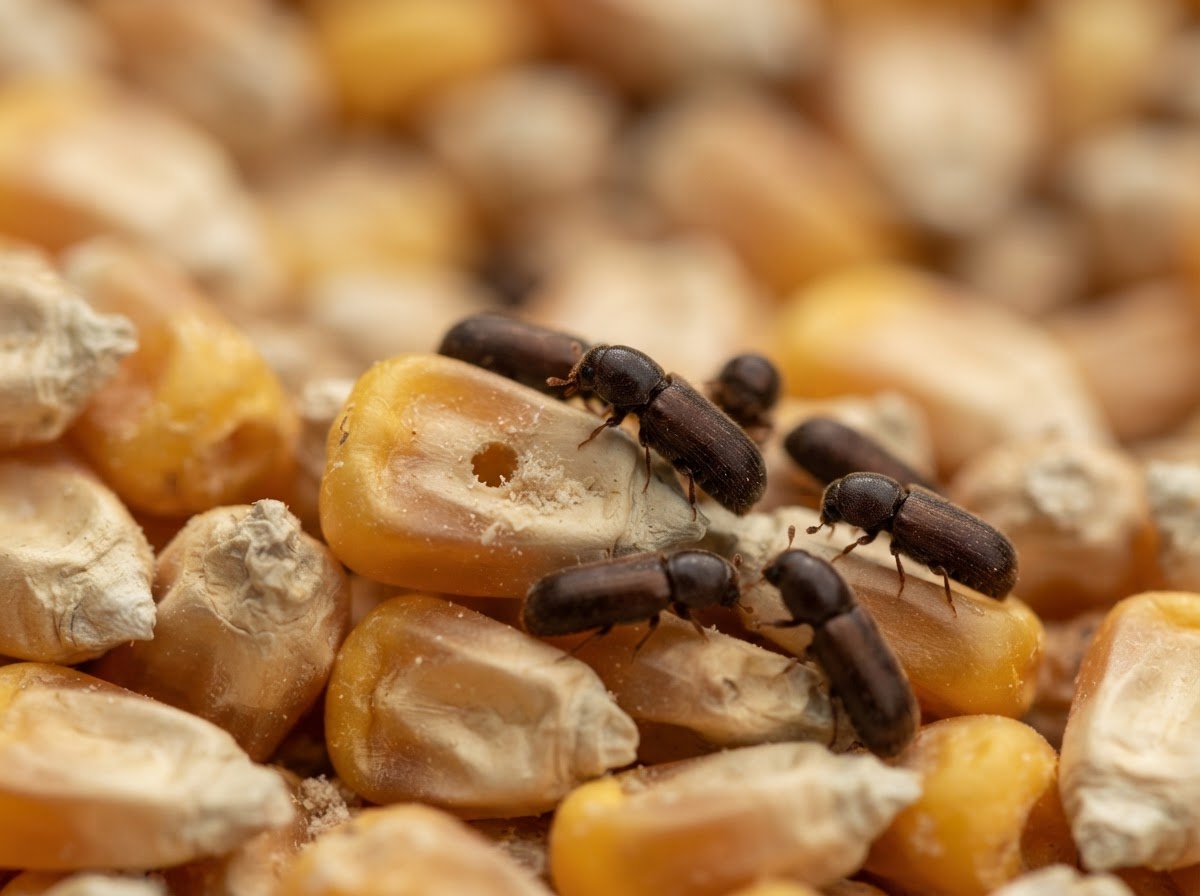
Grain borers are small beetles that infest stored food. The larger grain borer is dark, cylindrical and a few millimetres long, so it can be easy to miss among stored goods. It is associated particularly with maize and dried cassava chips, and may also affect other dried plant foods. In homes, compounds, shops and stores in Accra and elsewhere in Ghana, check bags, containers, shelves and storage areas where maize, cassava chips or other dried goods are kept. Fine powder around a package or small holes in kernels can be a clue, though a closer inspection is needed to identify the insect.
Infested provisions can be damaged and may no longer be suitable to keep. If overlooked, insects can spread to nearby stored goods. Crepps uses an IPM approach, beginning with inspection and identification, then checking the affected stock, storage conditions and possible routes of entry. Advice may include removing infested goods, cleaning and improving storage, followed by monitoring. Treatment is targeted and used only where needed. Fumigation is considered only when other methods will not control the problem, as part of an IPM plan rather than as a default.
Signs
Look for small, dark beetles in stored maize, cassava chips or other dried goods. Round holes in kernels, damaged contents and fine powder around bags or containers can indicate activity. Check nearby shelves and packages too, since insects may be present away from the first food item noticed.
Why it matters
Grain borers can tunnel through stored maize and dried cassava, damaging food and producing fine powder. Infested goods may need to be discarded, and an unnoticed source can affect nearby provisions. Identifying the insect and source helps guide proportionate action and protect sound stock.
The IPM approach
We inspect and identify the insect, check affected stock and look for entry routes or storage conditions that support activity. The plan may include removing infested goods, cleaning, improving storage and monitoring. Any treatment is targeted and used only where needed. Fumigation is considered only when other methods will not control the problem.
Prevention
Keep storage areas clean and dry, inspect maize and dried goods before storing them, and use sound, tightly closed containers. Rotate stock so older goods are used first, and check stored provisions regularly for insects, holes or powder. Clean spills promptly and keep storage spaces orderly.
Worried about grain borers?
Book an inspectionRelated pests
Weevils
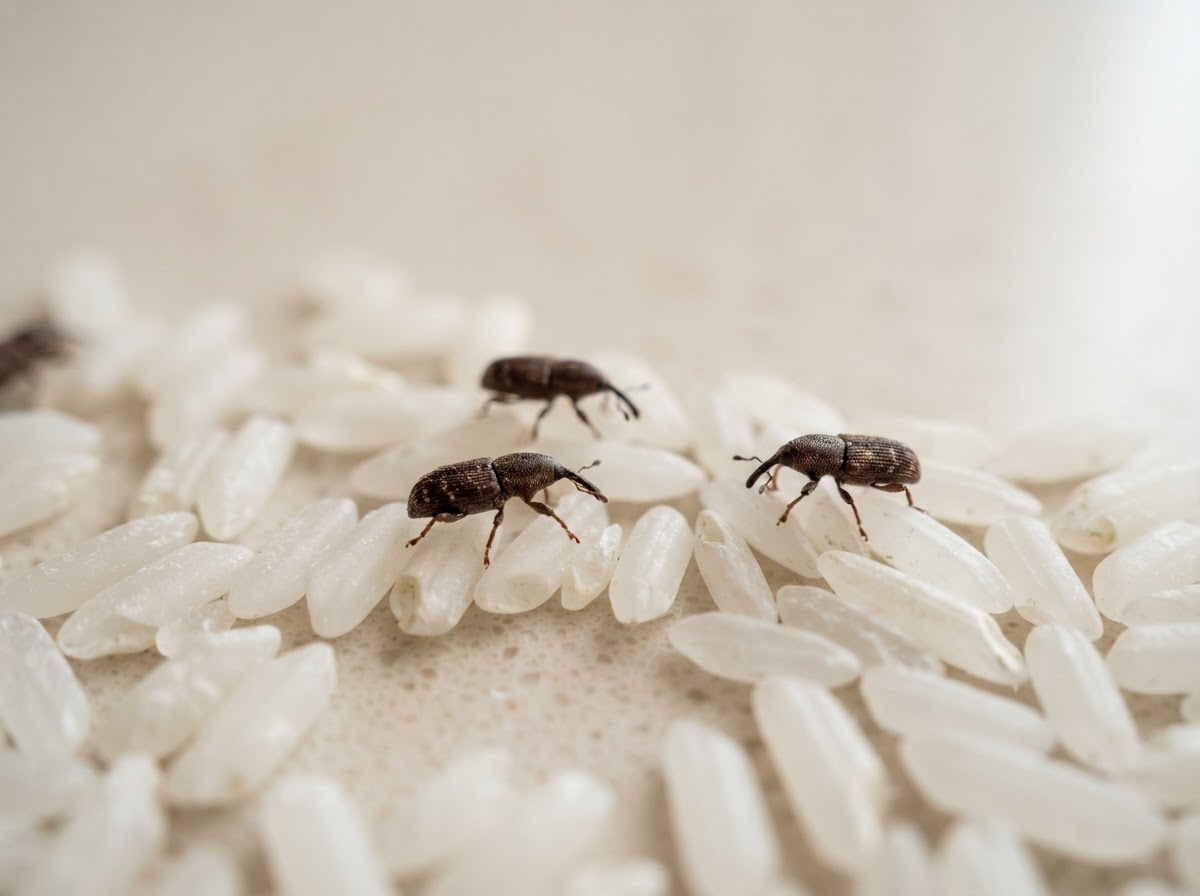
Some weevils infest grains and dry provisions; adults in or near food packets can signal a source worth checking in cupboards or storerooms.
See more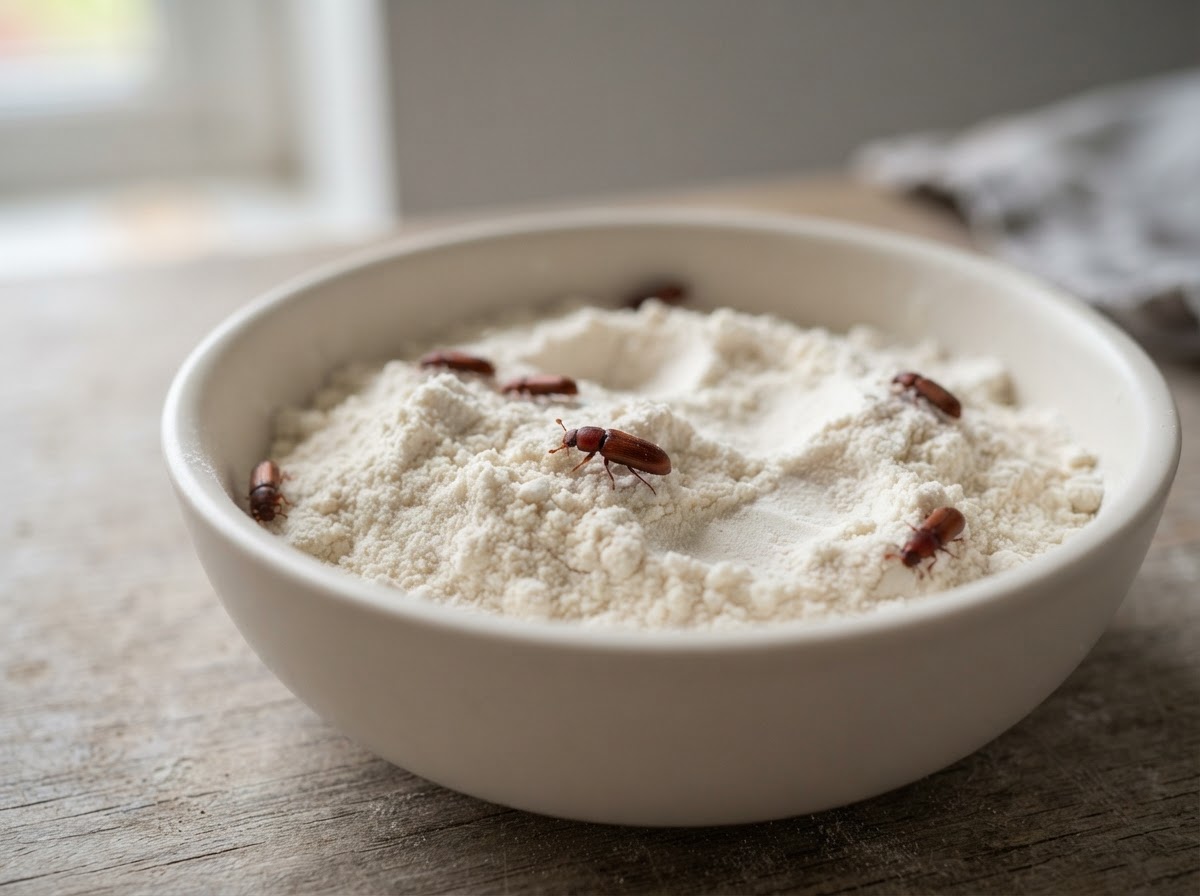
Flour beetles
Flour beetles are small insects associated with flour and other dry goods; activity in cupboards can make provisions unsuitable to keep.
See more
Pantry moths
Pantry moth adults may appear near kitchens while larvae develop in dry provisions; checking food packets can help reveal the source.
See more